The Rehabilitation of Palaces in Barcelona: The Art of Merging History and Contemporaneity at Palau Palmerola
The rehabilitation of historic estates in the heart of Barcelona is arguably one of the most exciting architectural challenges in the sector. It is not merely about consolidating structures, but about preserving the "soul" of the city. A paradigmatic example of this discipline is the recent intervention at the Palau Palmerola (House of the Counts of Fonollar), located on the emblematic Portaferrissa street, just a few meters from La Rambla and the Palau Moja.
A Prestigious Historical Legacy
Palau Palmerola is not just a residential building; it is a compendium of Barcelona's history. Its current structure, reconstructed in 1857 under the project of master builder Elies Rogent—a key figure in 19th-century Catalan architecture—rests upon foundations dating back to a 16th-century palace.
Over the years, its walls have housed talent and lineage: from the influential Güell family to contemporary figures such as Ferran Adrià, Jordi Labanda, and the photographer Outumuro. The recent architectural intervention faced the titanic task of honoring this legacy while adapting to the needs of the 21st century.
Rehabilitation Architecture: Respect and Synergy
The renovation project has achieved the most difficult balance in interior architecture: integrating a contemporary aesthetic without betraying the stately character of the building.
1. Original Elements as Protagonists
The intervention has highlighted noble materials, treating them as museum pieces:
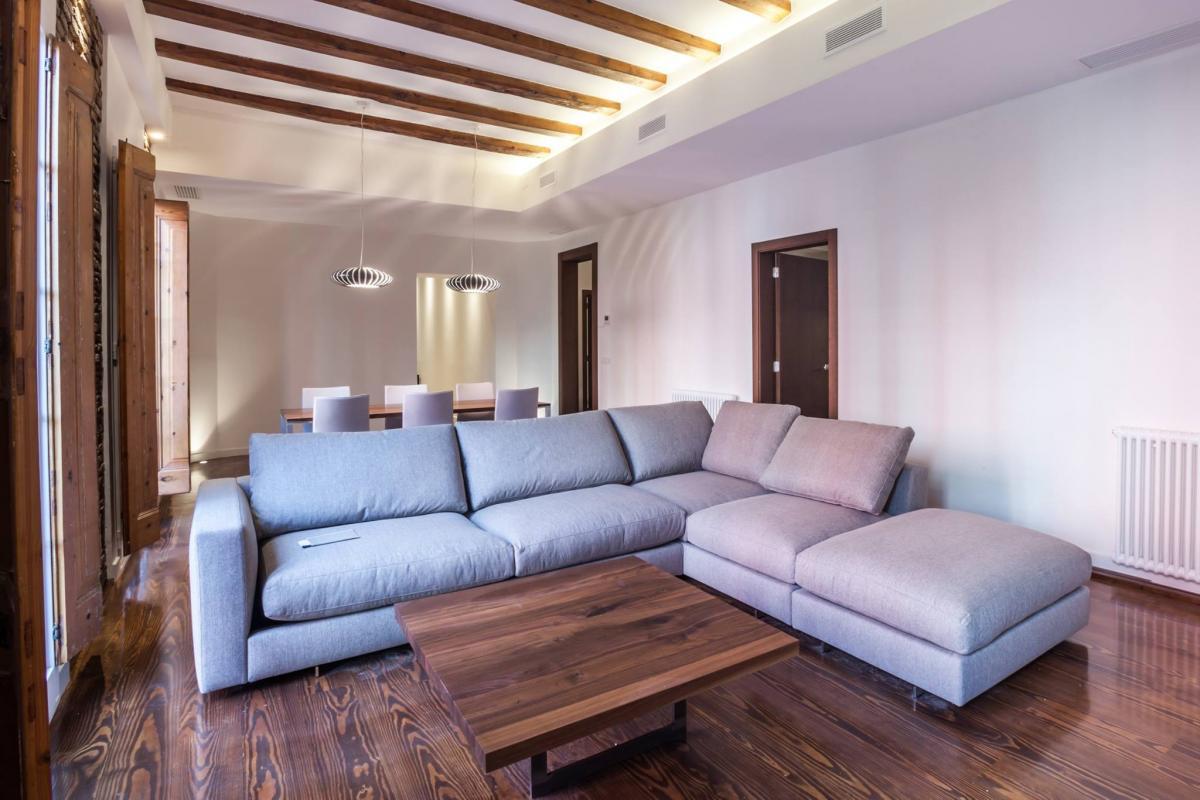
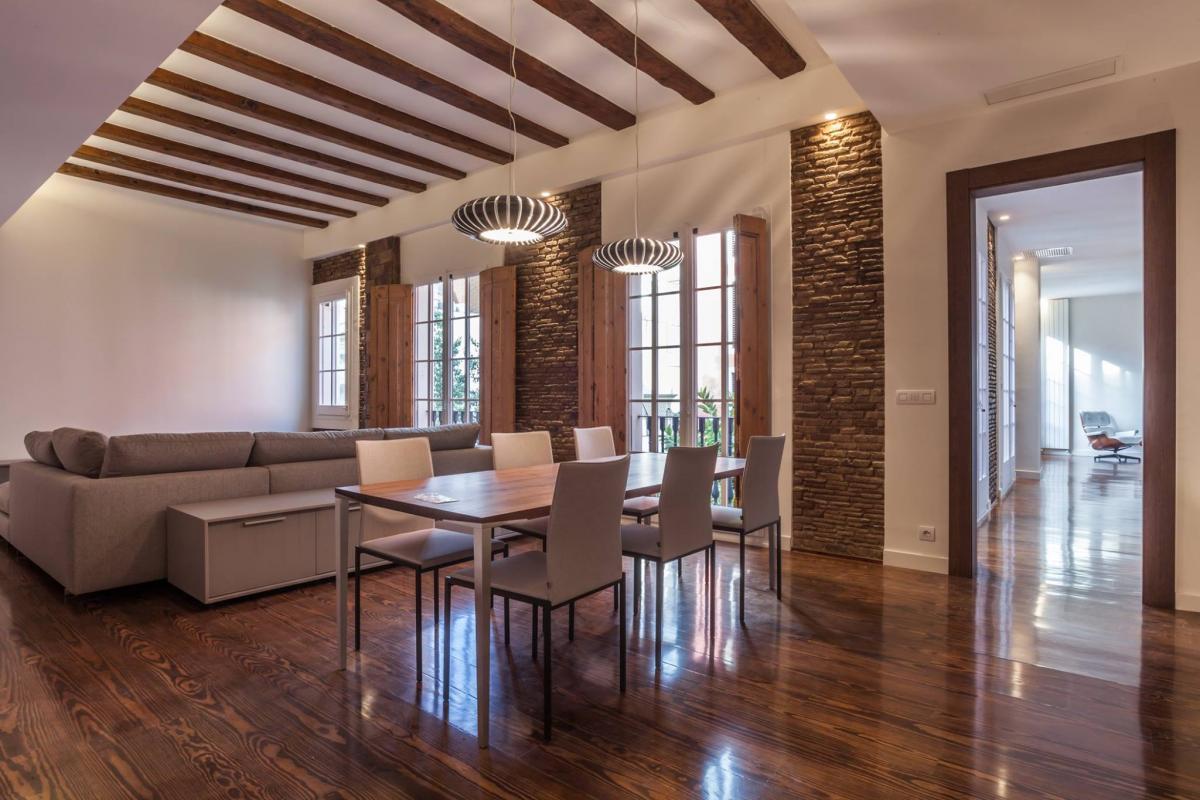
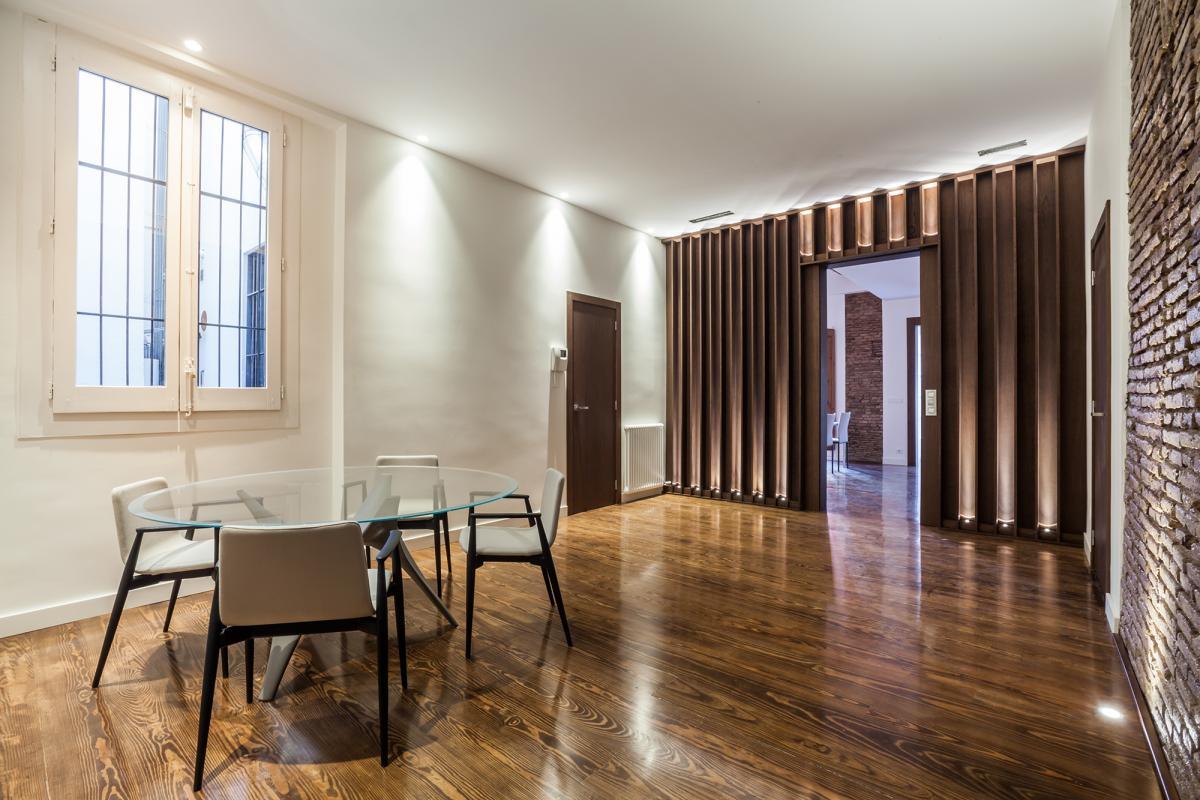
- Reclaimed pine floors: The warmth of the original wood has been preserved in lounges and hallways, providing an authentic patina impossible to replicate with modern materials.
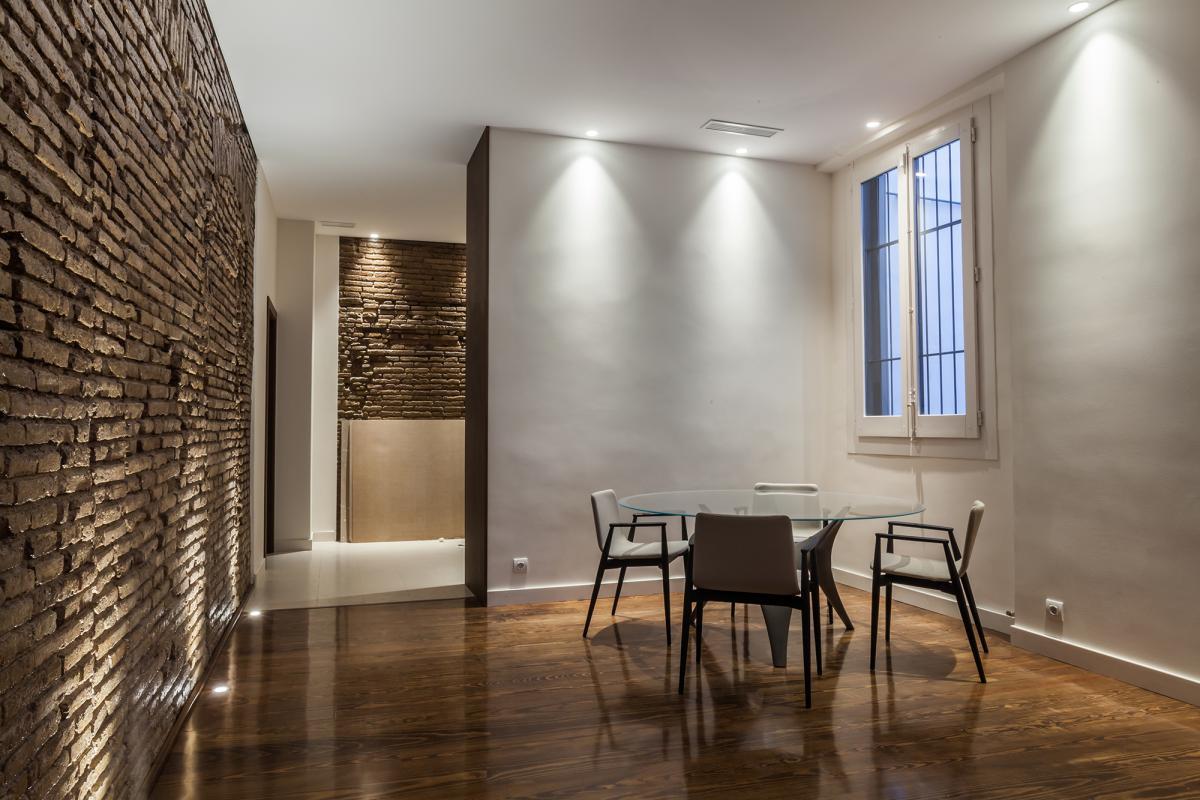
- Exposed brick walls: By removing layers of old plaster, the building's structural skin has been revealed, adding a raw, industrial texture that elegantly contrasts with contemporary designer furniture.
- Wooden beams: The ceilings, with their exposed beams, act as a natural frame that confers scale and proportion to the rooms.
2. The Interior Garden as the Backbone
One of the critical points of the rehabilitation was the management of light and the connection with the exterior. While the entrance hall and kitchen open toward a functional interior patio, the main salons and the transit hallway open onto the palace's interior garden. This green zone, populated by trees, not only acts as the building's "lung" but also provides a "green barrier" that ensures tranquility in the midst of the bustling Gothic Quarter.
Floor Plan Analysis: Fluidity as Strategy
The resulting layout is a case study on how to make a large-scale residence feel habitable and welcoming.
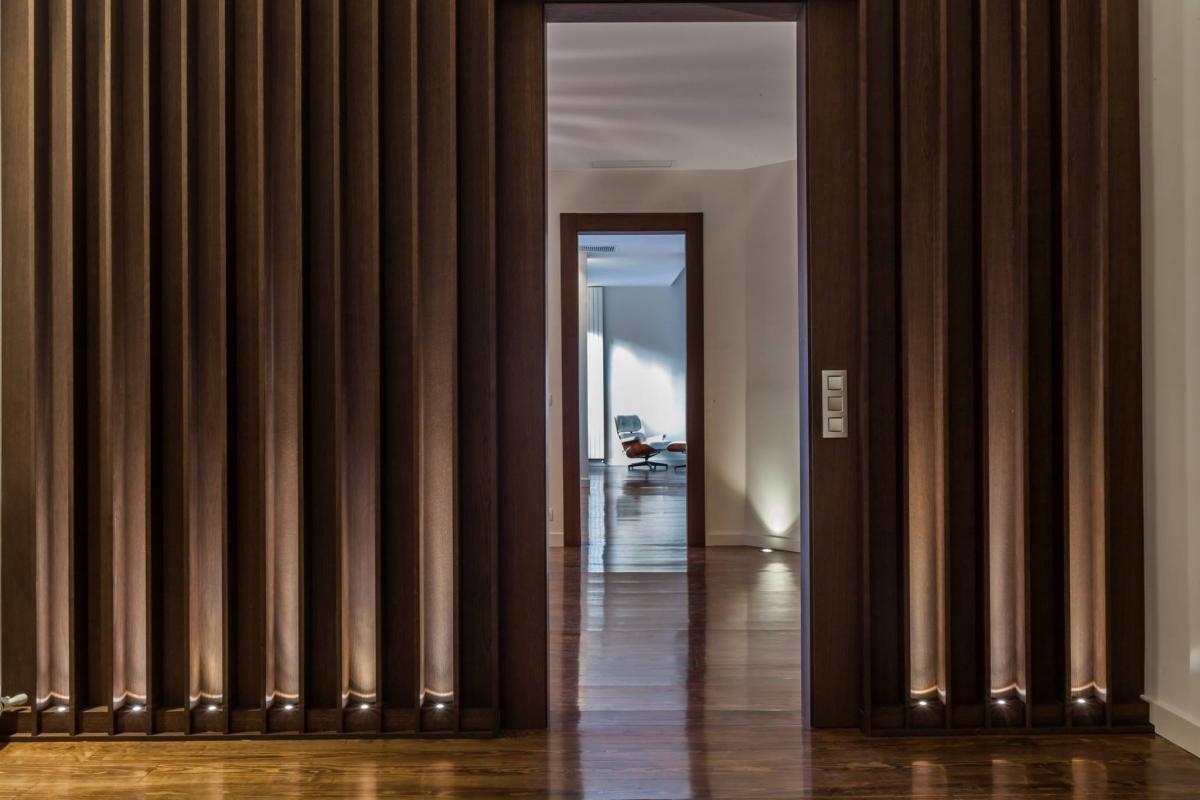
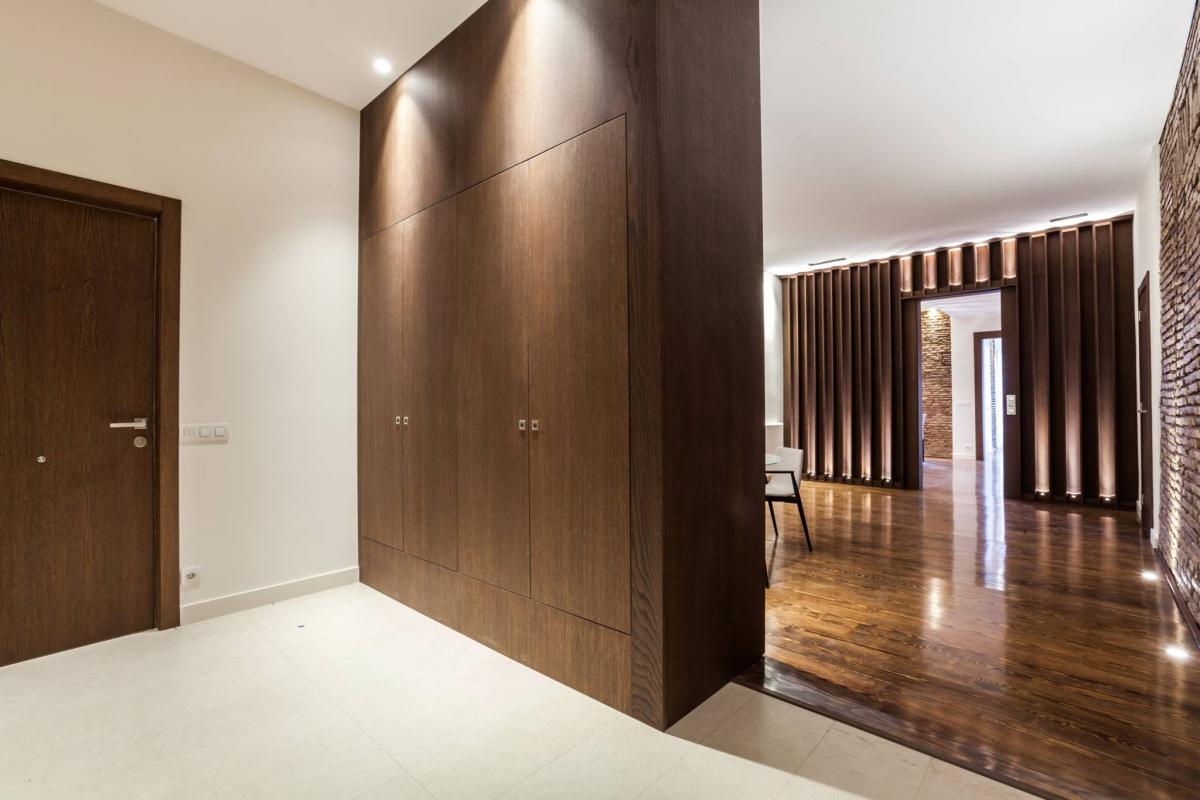
- Spatial sequence: Access, protected by a double armored door system, leads to a series of interconnected salons. The transition between them is mediated by clever architectural resources: exposed brick walls and backlit wooden reliefs that act as "visual filters."
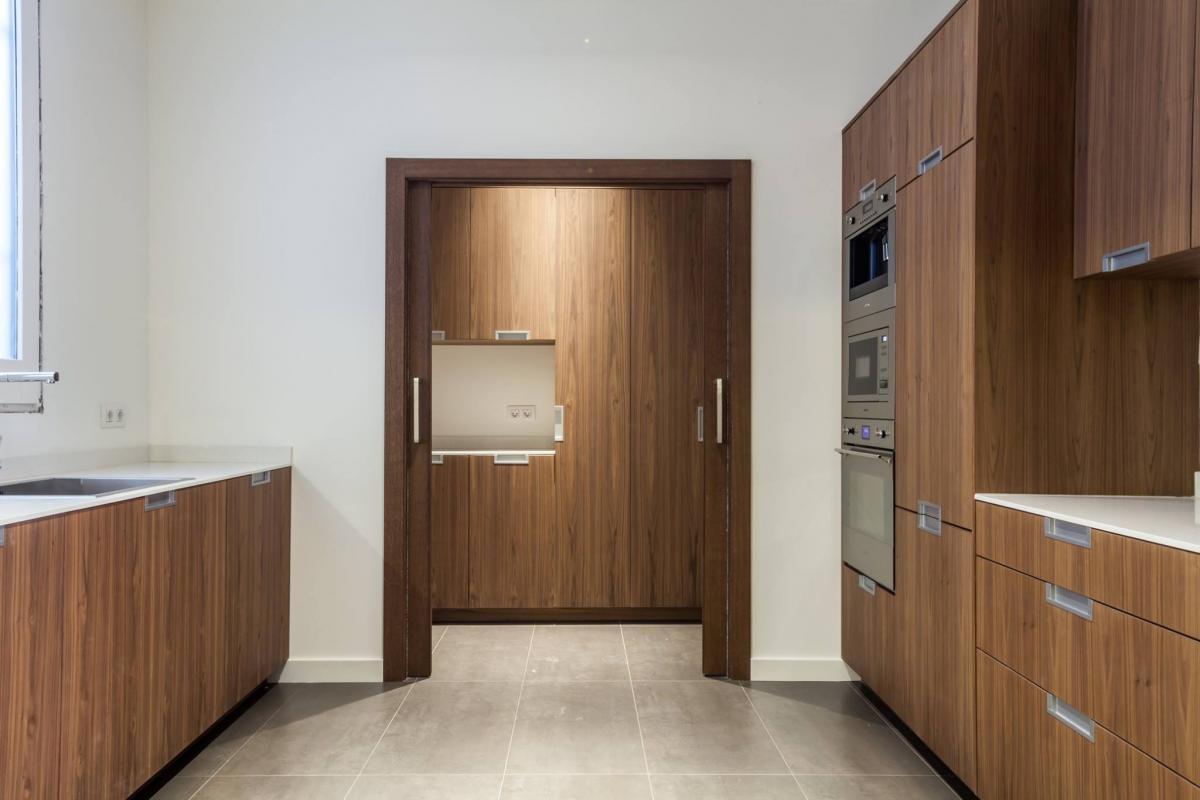
- The kitchen as the epicenter: Far from being a hidden service area, it has been designed as a spacious area that connects with the large rectangular salon, unifying the home's social life.
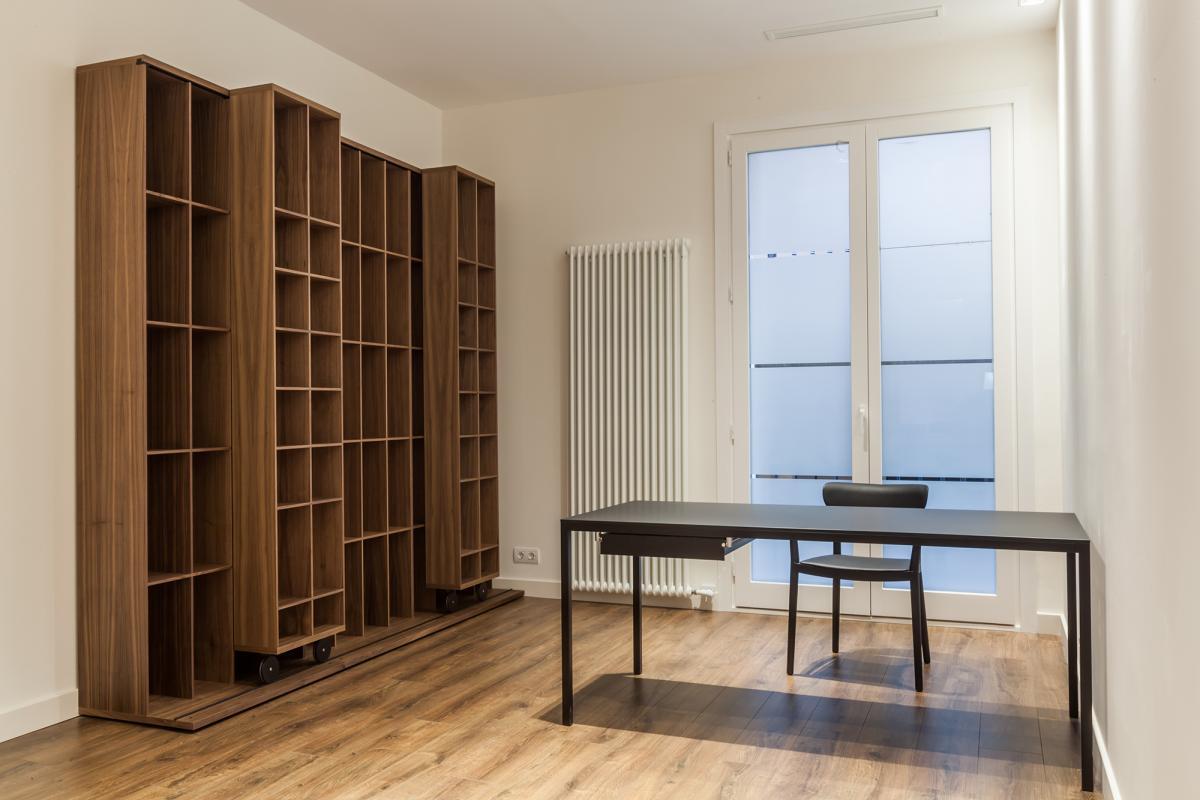
- The workspace: The office is a lesson in efficiency: a designer library that uses rails to overlap shelves, maximizing vertical space and allowing for a quiet, ergonomic work environment.
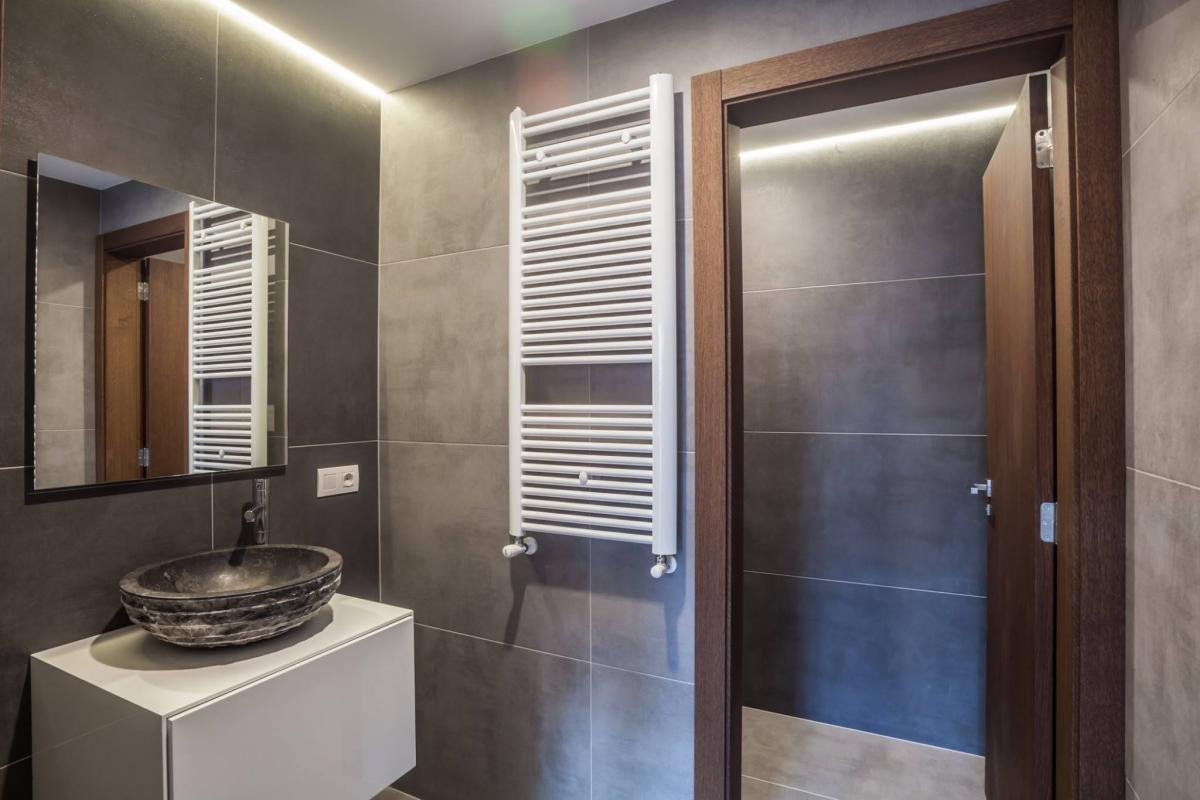
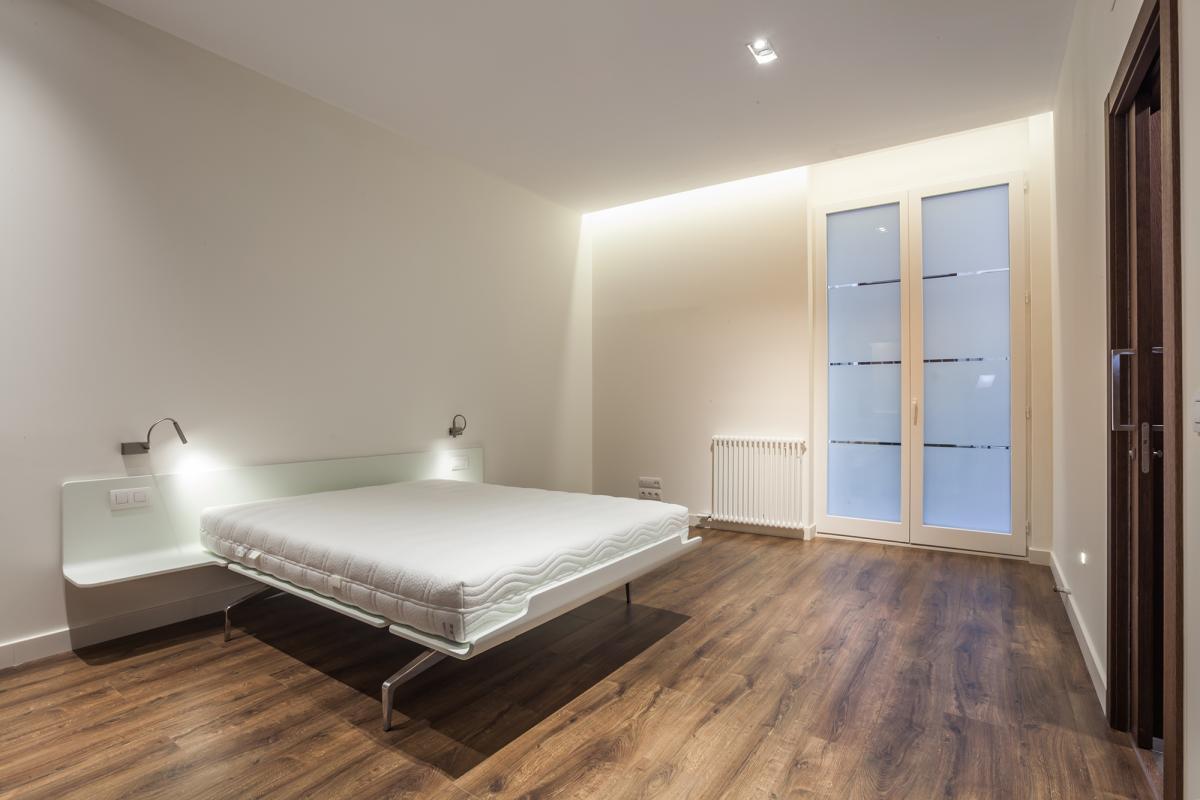
- The master bedroom: Located in the most private wing, it stands out for its direct connection to the garden, its own walk-in closet, and a bathroom that, being exterior, takes advantage of natural light in a way rarely seen in Barcelona's historic center.
Conclusion: Living in a Piece of History
The rehabilitation of Palau Palmerola is a reminder of why Barcelona remains an international benchmark in heritage management. The ability to introduce modern installations (radiator-based heating, air conditioning) and luxury finishes without altering the original volume of the rooms is what separates a simple renovation from true architectural restoration.
Living in this apartment is not just occupying a space; it is becoming the new custodian of a residence that has witnessed the cultural history of Catalonia. For the discerning buyer or tenant, this property represents the ultimate expression of exclusivity in Barcelona.
Technical Data for Professionals
- Location: Calle Portaferrissa, Gothic Quarter, Barcelona.
- Original Project: Elies Rogent (1857).
- Usage: Residential / Art Consulting.
- Highlights: 4 double bedrooms (en-suite), 3 lounges, office, private garden, and parking.
- Key to the renovation: Integration of contemporary systems within a historic envelope while respecting original materials.
Are you interested in learning more about rehabilitation projects in the center of Barcelona or looking for a unique property in the Gothic Quarter? At Top House Realty, we are specialists in managing high-value architectural real estate assets.